
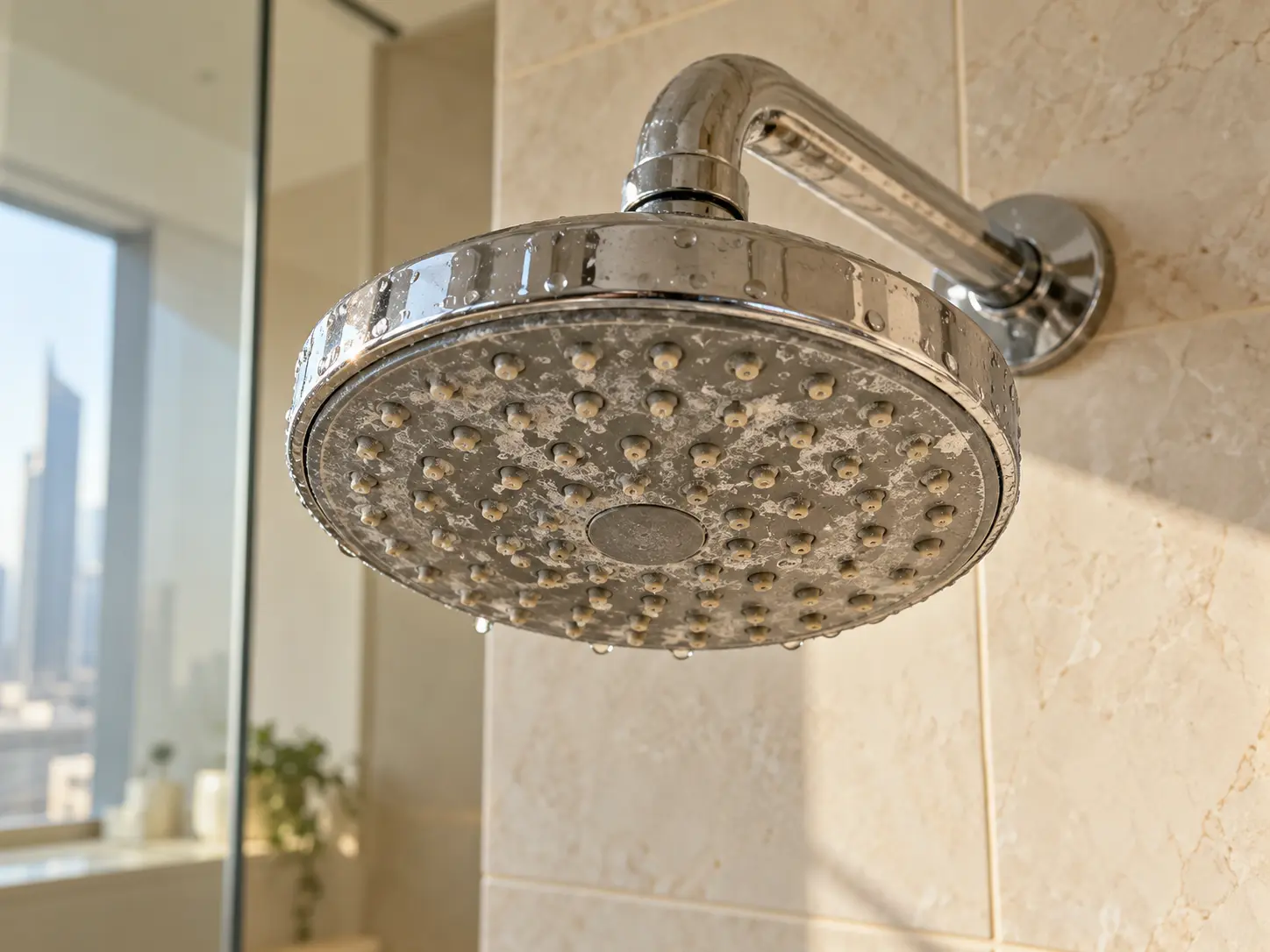
01 / RESIDUE
A less fresh feel
Minerals and cleansing products can leave residue. Hair may feel less fresh than expected after a wash, especially when products are not rinsed thoroughly.
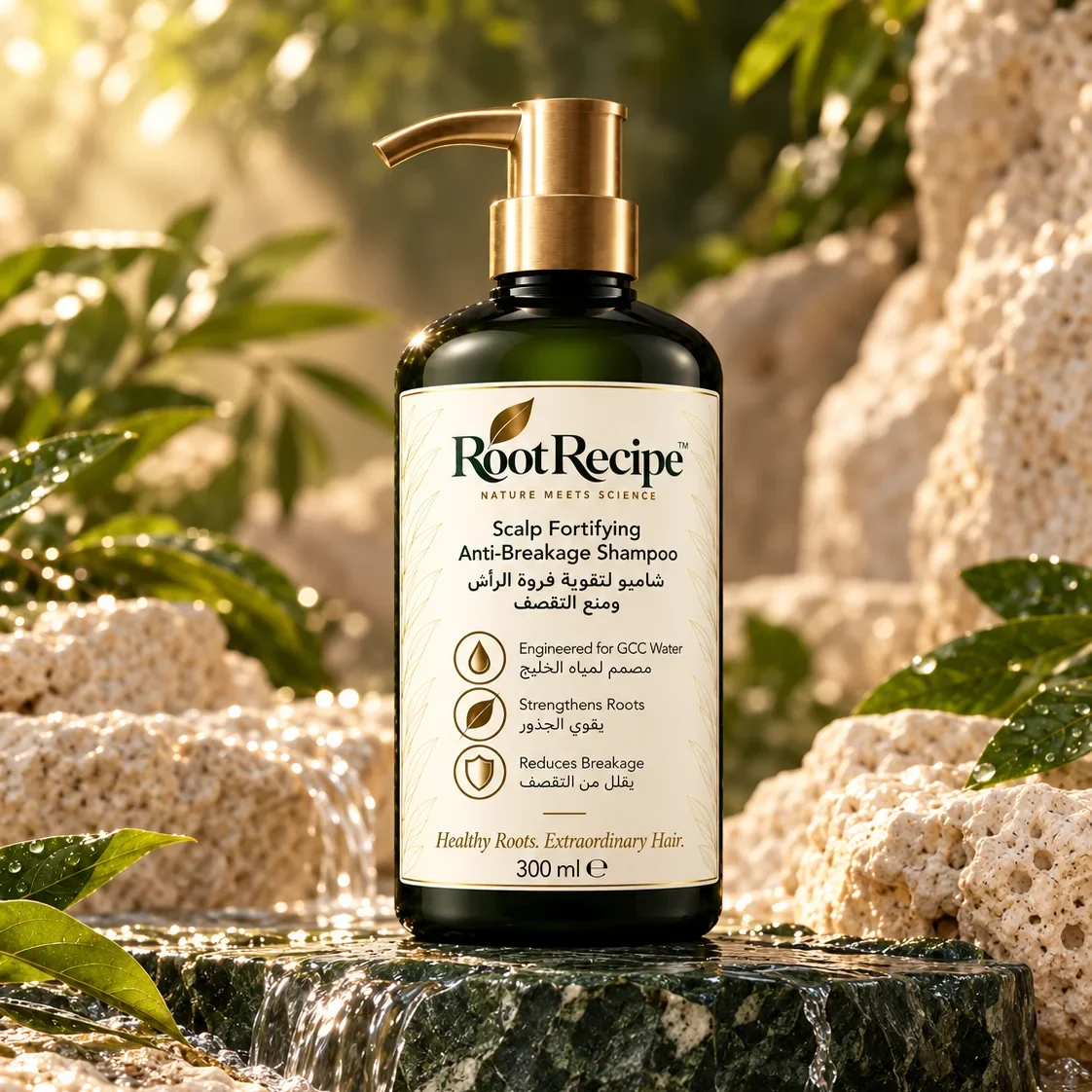
Your water is one part of the picture. Your shampoo and washing habits matter too. Get to know RootRecipe Scalp Fortifying Anti-Breakage Shampoo and the formula behind your wash.
Work shampoo through wet hair at the scalp, massage with your fingertips and rinse thoroughly.
With glycerin, panthenol and Disodium EDTA. View the complete ingredient list on our product page.
Keep handling gentle and adapt your wash routine to how your hair and scalp feel.
Shampoo does not change the hardness of your shower water.
Your hair routine does not end with your shampoo. The water you wash with plays a part, too. Here is a clear, practical guide to what hard water is, what you may notice, and how to care for your hair.
Hard water contains higher amounts of dissolved minerals, mainly calcium and magnesium. How hard your water is depends on your local supply.
As water moves through its environment, it can pick up minerals. Calcium and magnesium are the two main minerals used to describe water hardness. You may notice the effects around your home before you think about your hair.
Mineral marks on taps or shower glass, less lather from soap, and residue after washing can be clues. They are useful signs, but a water test gives you a clearer answer.
Everyone’s hair is different. These are reasons to pay attention to your wash routine, not a diagnosis that hard water is causing a hair problem.
Minerals and cleansing products can leave residue. Hair may feel less fresh than expected after a wash, especially when products are not rinsed thoroughly.

If your scalp feels uncomfortable, review your products and washing habits. Persistent itching, redness, or flaking is worth discussing with a qualified healthcare professional.

Hair that feels rough or tangles easily needs a gentler routine. Heat, styling, colouring, and handling can also affect how hair feels and whether strands break.
Hard water is real, and mineral deposits are measurable. Its direct effect on hair strength is less clear: small studies have reported different results. It would be misleading to say that hard water causes every case of breakage or hair loss.
Calcium and magnesium contribute to water hardness, and hard water can make soap less effective at lathering.
Breakage has many possible causes. Hair shedding from the root is different from a strand snapping along its length.
Find out your water hardness, cleanse gently, rinse thoroughly, and adjust your routine to how your hair actually responds.
You do not need to guess based on your hair alone. Start with the water coming from your tap.
Notice recurring mineral marks on the shower glass, tap, or kettle. These can be clues, though they cannot tell you the exact hardness.
Ask your water supplier or building management whether they provide a water quality report that includes hardness.
A suitable home test can give you a more useful reading. Follow its instructions and check the units used in the result.
RootRecipe Scalp Fortifying Anti-Breakage Shampoo is designed for a gentle cleansing routine. Its formula includes glycerin and panthenol, along with Disodium EDTA, an ingredient used to bind minerals in a formula.
A shampoo does not change the hardness of the water coming from your shower. If you are concerned about your supply, test the water and choose an appropriate water treatment separately.
Explore RootRecipe ShampooWater hardness: U.S. Geological Survey — Hardness of Water
Hair research: Effects of Hard Water on Hair (2013) · Hair Strength and Hard Water (2018)